


- Best Coral Affiliate Platform Alternatives for Amazon Brands - November 9, 2026
- Looking for Shopify Collabs Alternatives? Here Are 5 Worth Considering - November 9, 2026
- Best Affiliate Platforms for Amazon Brands (2025 Guide) - December 11, 2025
If you’re considering Coral as your next Amazon affiliate tracking platform, you’ve almost certainly landed on its comparison page. It’s a long table with Coral in the first column, five other platforms next to it, and a column of mostly “Yes” answers running down Coral’s side.
But having spent close to a decade running affiliate programs for Amazon brands, I read vendor comparison tables with one eyebrow raised. So I took every claim Coral makes about its competitors and checked it against their own pricing pages and knowledge bases. I was quite surprised to see that many of them were straight-up wrong. Not “depends on how you define it” wrong. Wrong as in the help docs have a screenshot of the exact setting or toggle that the Coral table says doesn’t exist.
Here’s what I found on Coral, what’s wrong (and right) about its claims, and the five alternatives I’d shortlist before committing.
What Coral Gets Right
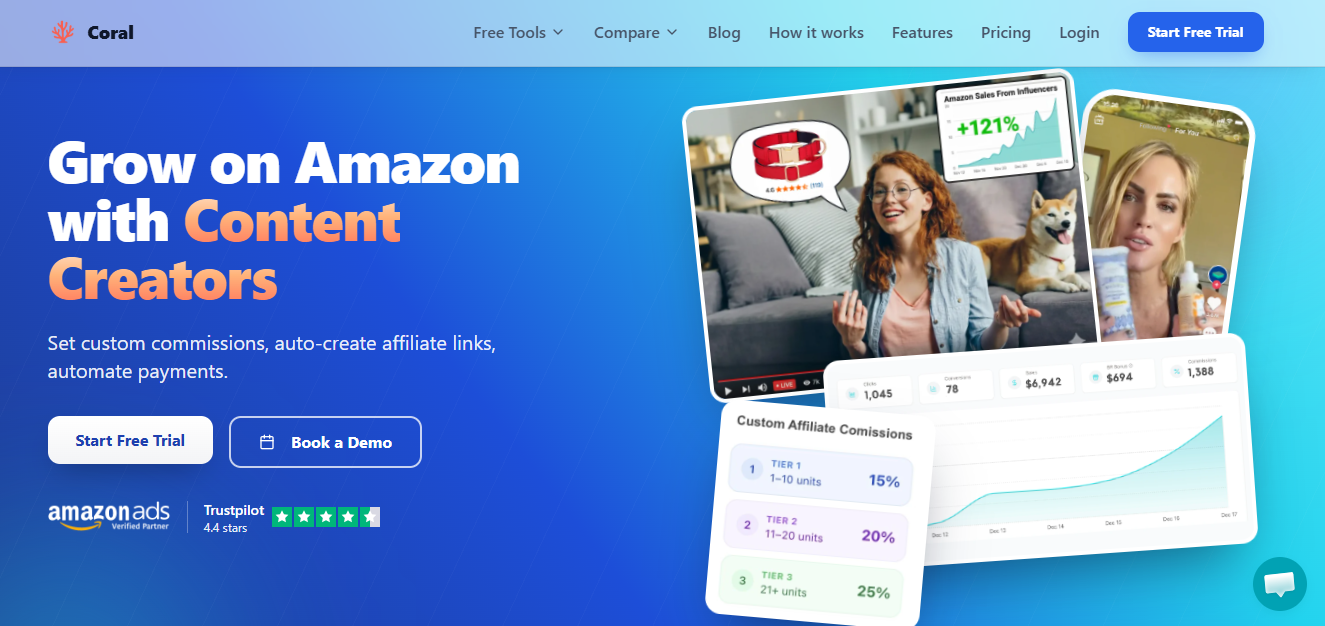
I started with Coral’s product and pricing pages instead of its comparison table. I wanted to know what it is before reading what it thinks of everyone else.
Coral is an Amazon-only affiliate tool for brands that recruit their own creators. You connect Seller Central, share a sign-up page, and each creator who joins gets an Amazon Attribution link. Starter is free with a 5% platform fee on affiliate sales. Pro is $99/month flat with no cut.
Four things on those pages stood out, and most of the alternatives below don’t offer them:
- Squeeze pages. On Pro, creator traffic can pass through a landing page first. There, you can set up Meta, Google Ads, and TikTok pixels or collect emails before the shopper reaches Amazon. Most platforms in this space send creator links straight to Amazon.
- E-signed contracts. You upload your own agreement, and creators sign it before their links unlock.
- PayPal and Venmo payouts. Creators get paid through accounts most of them already have, with no bank verification step.
- Creator-to-creator referrals. A creator earns commission on sales from other creators they bring in.
Coral deliberately doesn’t help you find creators, and it justifies that by arguing that creator marketplaces make creators loyal to the marketplace rather than to your brand. Then, in the FAQ at the bottom, it admits brands that switch usually use Coral together with their own outreach or a separate discovery tool. I liked the honesty because it tells you the actual cost of the $99 plan. If you have 150 creators in your DMs already, great. If you have 11, you’ll inevitably buy a second tool or hire someone.
Where the Table Goes Wrong
With Coral’s claims in one tab and each platform’s own pages in another, I went line by line. Here’s what didn’t hold up:
- No direct communication channel for Amazon Creator Connections. Coral’s page says this flat-out: no contracts, no direct communication channel, no way to build an ongoing partnership with a specific creator. But that’s not entirely accurate. Amazon shipped direct messaging inside Creator Connections back in early 2025, with a message icon in the corner and a full messaging drawer for brands and creators to chat about campaign details. It’s been live for over a year, so it doesn’t seem like something Coral missed in a recent update.
- GoAffPro’s “Amazon beta.” Coral’s table lists GoAffPro with a beta Amazon integration, both for Attribution and the Brand Referral Bonus. GoAffPro’s own docs and some independent 2026 reviews don’t mention Amazon anywhere. It’s a Shopify app, full stop. The independent review lists “no Amazon Attribution support” as a weakness. I couldn’t find one public source confirming an Amazon beta exists.
- Stack Influence’s price. Coral lists it at $39 a post. Stack Influence’s own pricing page currently says $30 on average. An older post on Stack’s blog still floats the $39 figure, so I see where Coral grabbed it; it’s just not the current number.
I don’t think there’s malicious intent here. Comparison tables go stale. Competitors ship things and edit pricing pages all the time, and updating five columns of someone else’s product isn’t anyone’s priority. That’s why I wouldn’t pick a platform off one, including the one you’re reading.

The Table I Wish I Had
Yes, after all that, a table. The difference is that everything I listed below comes from the vendor’s own pages. Where a cell says “not published,” that’s because the vendor doesn’t publish it. Costs are platform fees only; creator commissions come on top everywhere.
| Pricing model | Platform cost at $20K/mo affiliate sales | Finding creators | Tracking window | Creator payouts | |
| Coral | Free + 5% (Starter) or $99/mo flat (Pro) | $1,000 Starter / $99 Pro | Bring your own | 14 days | PayPal, Venmo |
| Levanta | $750/mo + 3.5% (Gold); as low as ~$375/mo + 3.5% on the Launch Plan for $1M–$3M brands | $1,450 on Gold, less on Launch Plan | 90K+ creator marketplace, plus social search | 14 days | Stripe |
| Amazon Creator Connections | No platform fee; $5K minimum budget, 10% minimum commission | $0 | Open campaign, creators opt in | 24 hours | Paid by Amazon |
| Archer Affiliates | No sign-up or monthly fee; cut not published | Not published | Network of 1,500 or 2,500+ (the site says both) | 14 days (Attribution) | Not published |
| PartnerBoost | Demo only for Amazon | Not published | 50,000+ publishers and creators | 14 days | Handled by the platform |
| Stack Influence | About $30 per completed post, no monthly fee | Not sales-based | Fully managed | No sales tracking | Paid in product |
The Best Coral Alternatives
Levanta
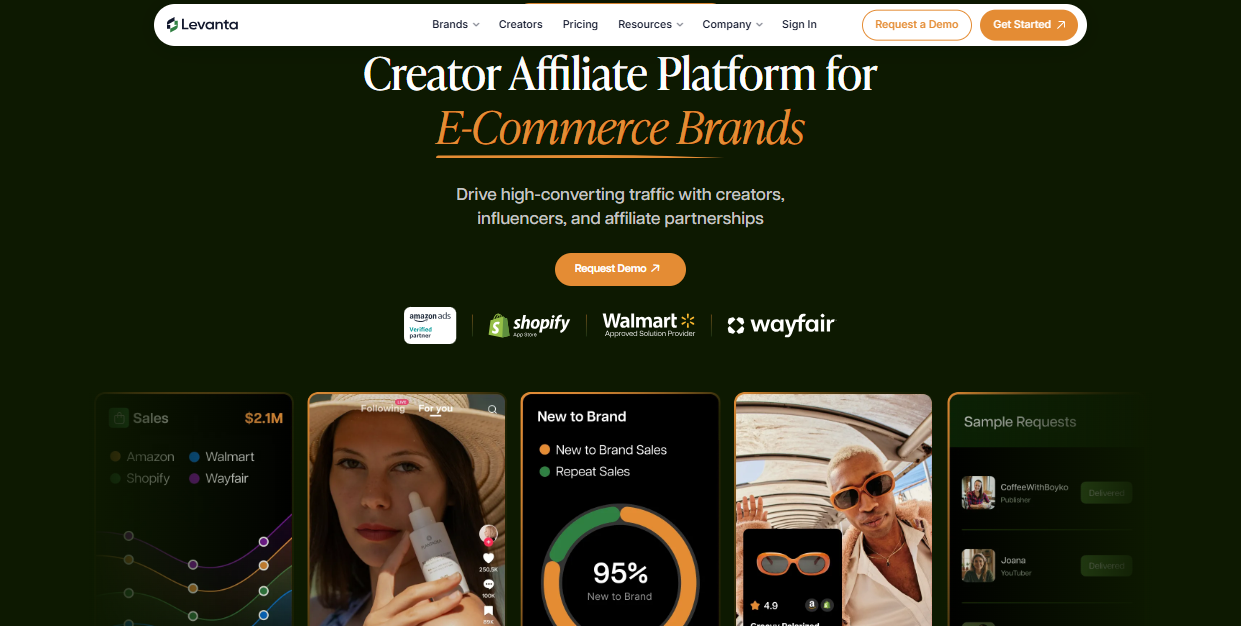
Coral wants you to bring every creator yourself. Levanta assumes you’ll bring some, and gives you the tools for that: a branded sign-up page, your own terms, and auto-accept. On top, it adds a marketplace of 90K+ vetted creators and AI-powered search for TikTok, Instagram, and Facebook creators who haven’t joined Levanta yet.
Most of what you pay for happens after a creator says yes. Sampling runs through Amazon’s fulfillment, so there’s no spreadsheet of shipping addresses. Paid placements are funded upfront and released once the post is verified live. And Levanta pays every creator from one monthly invoice and handles the 1099s. It runs Amazon, Shopify, Wayfair, TikTok Shop, and Walmart from one account, and it connects to Amazon Creator Connections.
It is the most expensive platform on this list that publishes its pricing, and not by a little. Gold covers a single marketplace, creator payouts go through Stripe only, and there are no squeeze pages, so every click goes straight to Amazon. For pre-Amazon email capture as your main strategy, Coral is still a better choice.
The Gold plan costs $750/month plus 3.5% of affiliate-driven sales, covering one marketplace and 50 creator invites a day. Enterprise has custom pricing, and the Launch Plan cuts SaaS fees by more than half for qualifying $1M–$3M Amazon brands. Creators can join for free and keep their full commission.
Amazon Creator Connections
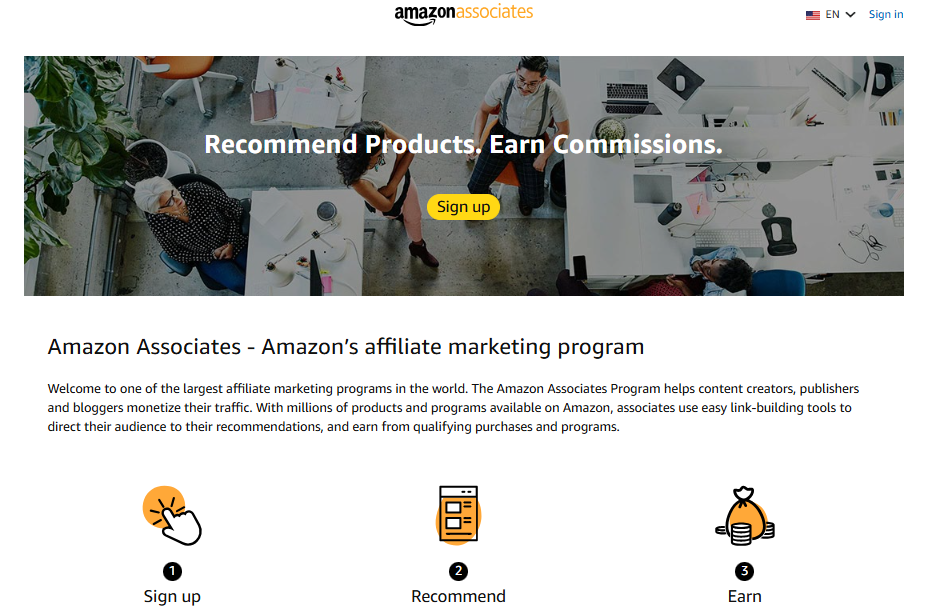
If I’d never paid a creator commission before, I’d start here, mostly because there’s no software bill. You publish a campaign in Seller Central with three settings:
- A commission rate of at least 10%.
- A budget of at least $5,000, which caps commissions rather than being charged upfront.
- A run of 30 to 365 days.
Eligible creators then decide whether to opt in.
With Amazon XCreator Connections, Amazon runs the whole thing, which means that there’s no integration to set up and no platform fee. Also, since early 2025, brands can message creators who join a campaign directly inside Creator Connections.
You don’t control much, though. You can’t hand-pick creators, nobody’s obligated to join, and on top of that, those minimums have changed before. Older guides report the $5,000 budget as an update. You’ll also need Brand Registry and a US advertising account.
It’s a cheap way to learn whether creators are selling your products at all. The only cost is your commission on attributed orders, up to the budget you set.
Archer Affiliates
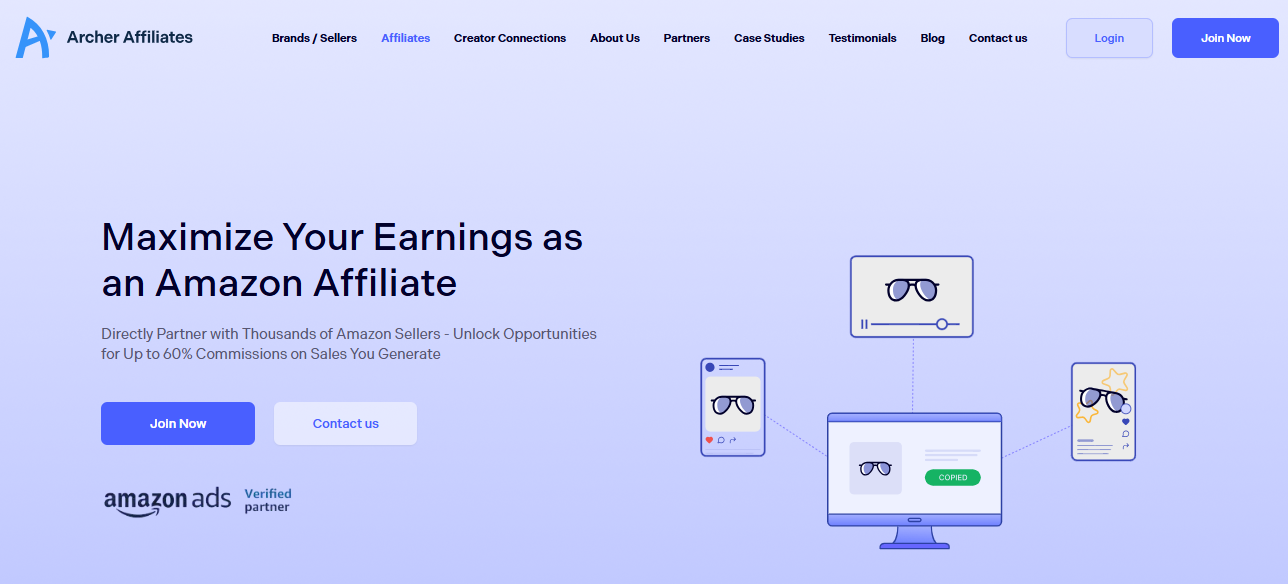
Archer has the simplest pitch on this list: no sign-up fee, no monthly fee, just commissions. You connect your Amazon Advertising account, import your catalog, and set offers. Affiliates in Archer’s network create their own Attribution links and send you sample and promo code requests. Every sale counts toward the Brand Referral Bonus.
That’s a very low-risk setup since you don’t pay anything until a sale happens, and affiliates come to you with sample and promo code requests themselves.
Archer’s homepage says 2,500+ affiliates, but its seller page says 1,500+, so I can’t tell you which is current. I also couldn’t find what Archer takes from each sale anywhere on the site. A commission-only platform still makes money somewhere. Get that number on the call, because Archer advertises an 18% average affiliate commission, and you’ll want its cut in the same spreadsheet.
PartnerBoost
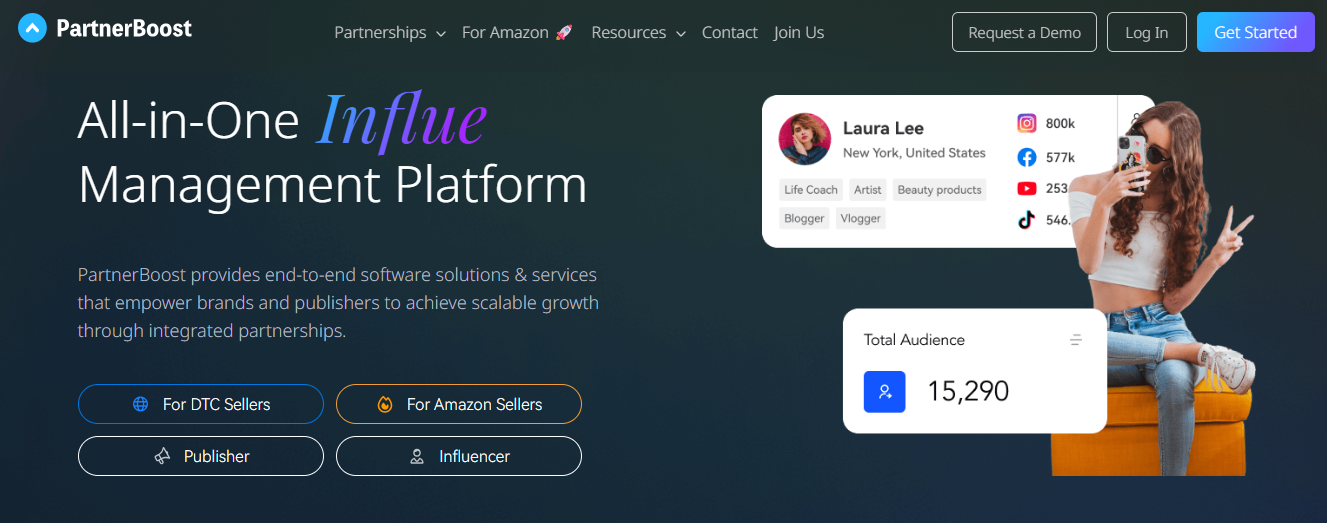
I went to PartnerBoost looking for a price and came back with a Shopify app listing. The only figure I found was $3,999/year, and that’s for its DTC Shopify app, not Amazon. For Amazon brands, pricing means a demo call.
That call gets you access to:
- Nine Amazon marketplaces, with teams in the US, Europe, and APAC.
- A claimed network of 50,000+ publishers and creators.
- Commission rules down to product, category, campaign, or individual partner, on a 14-day window.
Nine marketplaces out of the box is rare in this category and a godsend if you sell in more than one country on Amazon. Commission rules down to the individual partner give you the same control you’d get from the Amazon-only tools.
It also takes advantage of publisher networks in a way Coral doesn’t. Tradedoubler publishers in Germany, the UK, and France can promote PartnerBoost’s Amazon brands straight from their Tradedoubler accounts.
PartnerBoost’s FAQ says it’s for established brands already generating revenue, and I’d take that at face value. Selling in Europe? Put it on the shortlist. US-only brand with 30 SKUs? Probably not.
Stack Influence
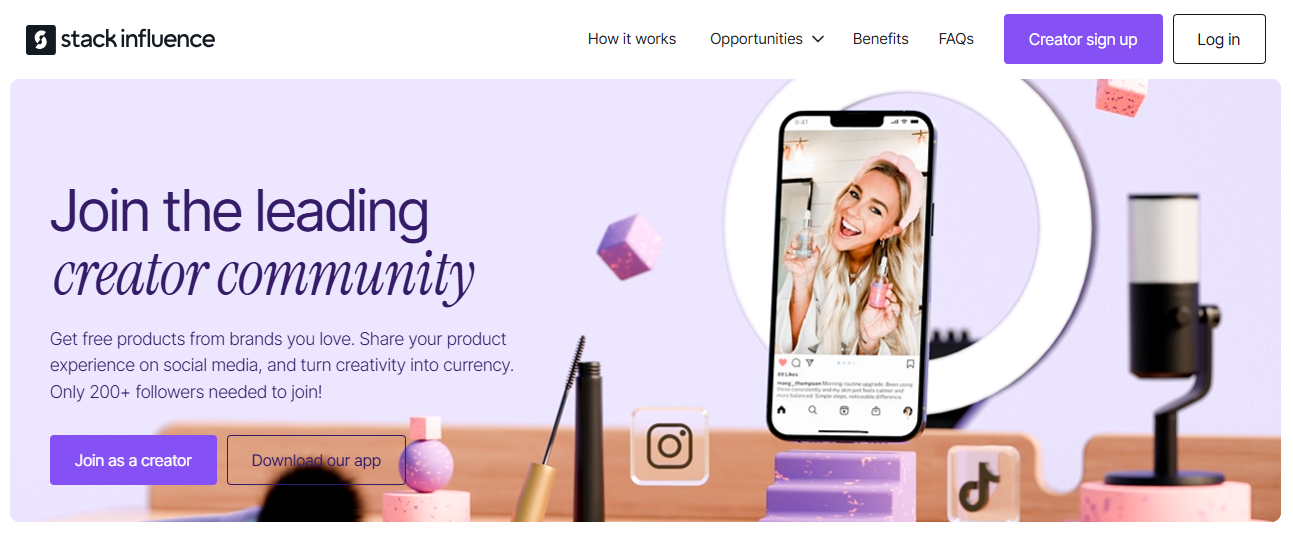
Stack Influence appears in Coral’s comparison table, and it took me a minute to see why, because it isn’t an affiliate platform. It’s a managed product-seeding service. Creators get your product and post about it, and you pay per verified post. The model has no commission links.
But it still belongs here. Plenty of brands looking at Coral are really looking for a pile of creator content without running outreach, and that’s the job Stack takes off your plate. Don’t expect per-creator sales tracking from it, though. Pair it with an affiliate platform if you need that.
What it does better than anything else here is volume without effort. Stack handles sourcing, and you only pay once the post is live. If you’re trying to build new listings that need social proof, you’ll probably be happy with what Stack Influence offers.
Stack’s pricing page puts it at about $30 per completed post on average, with no monthly fees.
So Which One Should You Pick?
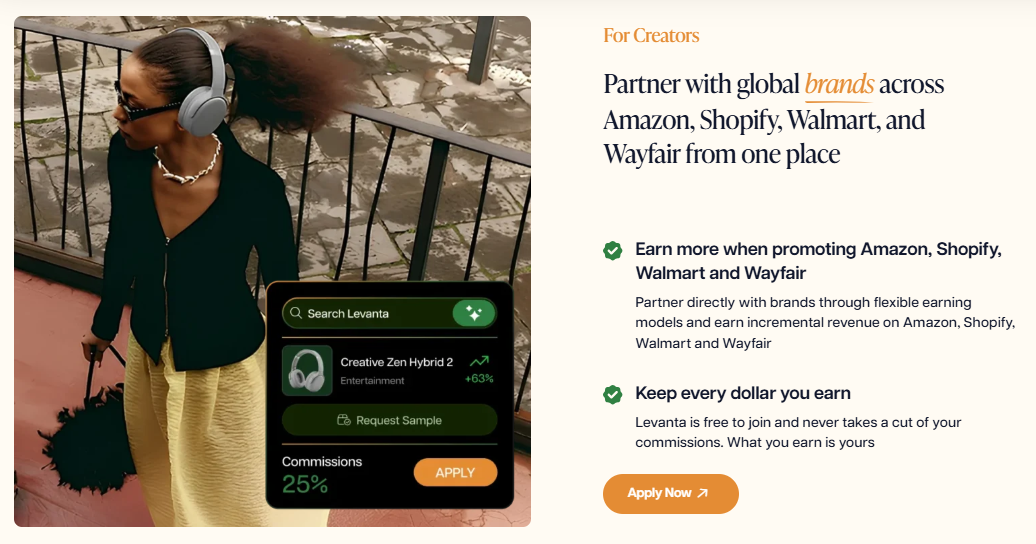
Coral makes sense if you already have a roster, sell only on Amazon, and the squeeze page is the point. Just price Starter and Pro against your monthly volume and forget the comparison table. I’d choose Amazon Creator Connections if you want to test creators with no software bill, Archer Affiliates if you want to avoid unnecessary fees until a sale happens, PartnerBoost if you sell in more than one Amazon country, and Stack Influence if you need a lot of creator content without doing outreach.
However, Levanta is my overall pick for most brands, because it’s the only one here that covers recruiting, sampling, paid content, payouts, and taxes in one place, on Amazon, Shopify, Wayfair, TikTok Shop, and Walmart. You pay for that, so it makes the most sense if, and only if, affiliates are already bringing in a lot of revenue (or you’re sure they will).
Whichever way you go, open the other vendor’s documentation before trusting anyone’s table. All corrections I mentioned above came from pages anyone can read.
As a disclaimer, I checked everything on September 22, 2026, and these pages change constantly. Levanta’s pricing page was last updated in July 2026. If you’re reading this much later, trust the sources over the snapshot.