


- Levanta vs PartnerBoost: How To Know Which Is Right For Your Affiliate Mix - November 10, 2026
- The Best SaaS Affiliate Platforms for Tax Software Brands - May 2, 2026
- How to Find Instagram Influencers for Shopify in 2026 - April 3, 2026
Levanta and PartnerBoost help companies manage their affiliate and creator programs, but they’re built to support different affiliate program structures. The right affiliate platform for your affiliate mix depends on where your sales happen and how much program friction your team can comfortably manage.
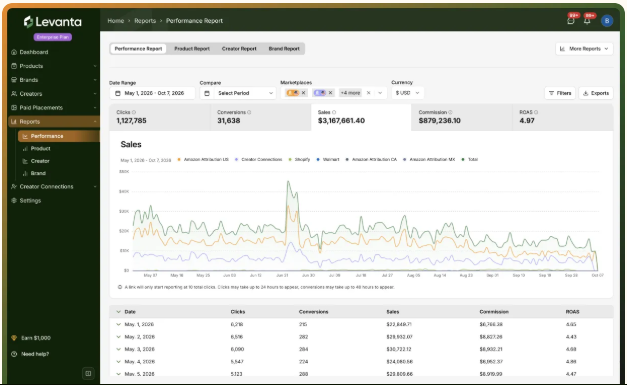
If you manage a creator and affiliate program on any or all of Amazon, Shopify, Wayfair, TikTok Shop or Walmart and want tracking, attribution, seeding, and payouts all in one workflow, Levanta gives you the tools and a real-time dashboard with robust reports. So if you’re having to pull Amazon and Shopify data separately into a homebaked spreadsheet, Levanta’s consolidation alone can save hours every week.

If you manage a broader partner mix (publishers, ambassadors, referrals, influencers) or already work inside affiliate networks like Awin, CJ, Impact, Tradedoubler and you want managed support alongside the software, PartnerBoost may be the better fit.
Levanta answers: How do I track and grow creator-driven sales across my marketplaces and my DTC store in one place?
PartnerBoost answers: How do I manage every kind of partner relationship, including the ones already living inside networks?
Below I’ll break down a side-by-side comparison so you can make an informed decision tailored to your current and future affiliate strategy.
At A Glance:
| Levanta | PartnerBoost | |
| Model | E-commerce creator/affiliate platform | Broad partnership management |
| Partner types | Creators, affiliates | Affiliates, influencers, referrals, ambassadors, publishers |
| Discovery | Marketplace with 90,000+ creators and influencers | Network-based; Tradedoubler access to 2,500+ Amazon sellers |
| Managed services | Software-led | End-to-end option |
| Setup effort | Lower friction | Higher friction |
Levanta Vs PartnerBoost for Amazon
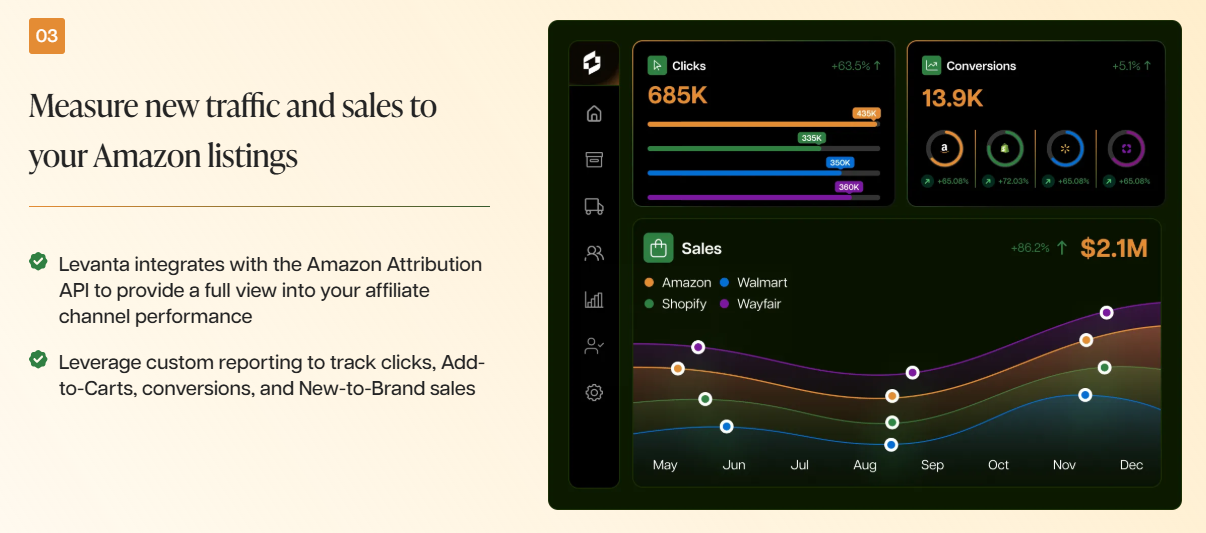
Amazon is where affiliate managers find they most often lack transparency. The marketplace decides what data you see, and every platform has to work within those limits.
What matters most on Amazon
- Partner-level attribution: who drove the sale
- Product-level visibility: which ASINs are selling through which partners
- Commission control, including custom rates for top performers or new launches
- Fast, reliable payouts, since creators lose trust quickly when payments lag
How Levanta approaches it: Levanta connects directly to Amazon’s Attribution API rather than relying on external pixel tracking, giving insight into which partner drove a sale, which product they sold, and how commissions play out inside the marketplace.Then it ties that info back to discovery, product seeding, tracking, commissions, reporting, and payouts.
How PartnerBoost approaches it: PartnerBoost also supports Amazon, and its Tradedoubler integration gives publishers access to Amazon brands with SKU-level insights, deep links, and flexible commissions. That integration currently reaches more than 2,500 Amazon brands. If your program already runs through larger affiliate networks, this will flow into your setup naturally.
If Amazon is your biggest gap and you need marketplace-native attribution and creator tracking, Levanta is the more focused option. If Amazon is one piece of a network-driven partnership strategy, PartnerBoost’s approach may fit better.
Levanta Vs PartnerBoost for Shopify
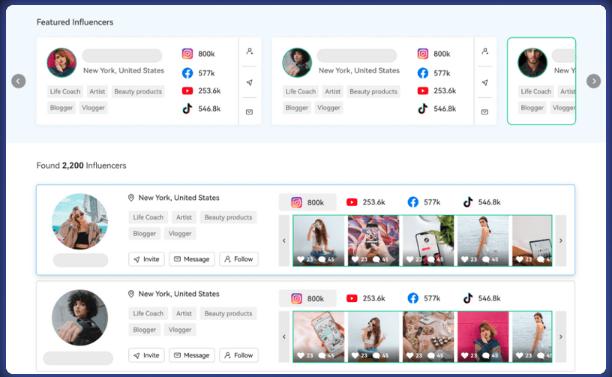
Shopify programs work differently in that you have you managing links, discount codes, UTMs, and your own customer data, and you own the full customer relationship. That gives you more control, but also more to manage.
What matters most on Shopify
- Link and discount-code tracking that ties back to individual partners
- Product-level reporting, so you know which SKUs creators actually move
- Compatibility with your existing martech stack
- Clear handling of commissions, so partners are paid on the right orders
How Levanta approaches it: Levanta is also built to run a standalone Shopify creator program just as efficiently, with its own dedicated pricing tier for Shopify-only brands. Its Creator Marketplace has 90,000+ vetted publishers, influencers, and creators across Shopify, Amazon, and Walmart, so no need for those homebaked recruitment workflows. If you sell on both Amazon and your own store, you can also run both from the same platform.
How PartnerBoost approaches it: PartnerBoost covers influencer management, content tracking, product seeding, and campaign organization inside a broader partnership platform. PartnerBoost gives you more room to grow if Shopify is just one channel among many partnership types.
Both platforms support DTC workflows well. If you’re Shopify-only, Levanta’s dedicated Shopify tier is worth a look alongside DTC-native tools, not just as an add-on to an Amazon program. If you want one view across Shopify and marketplace channels together, Levanta also has a simpler structure.
Levanta Vs PartnerBoost for Walmart
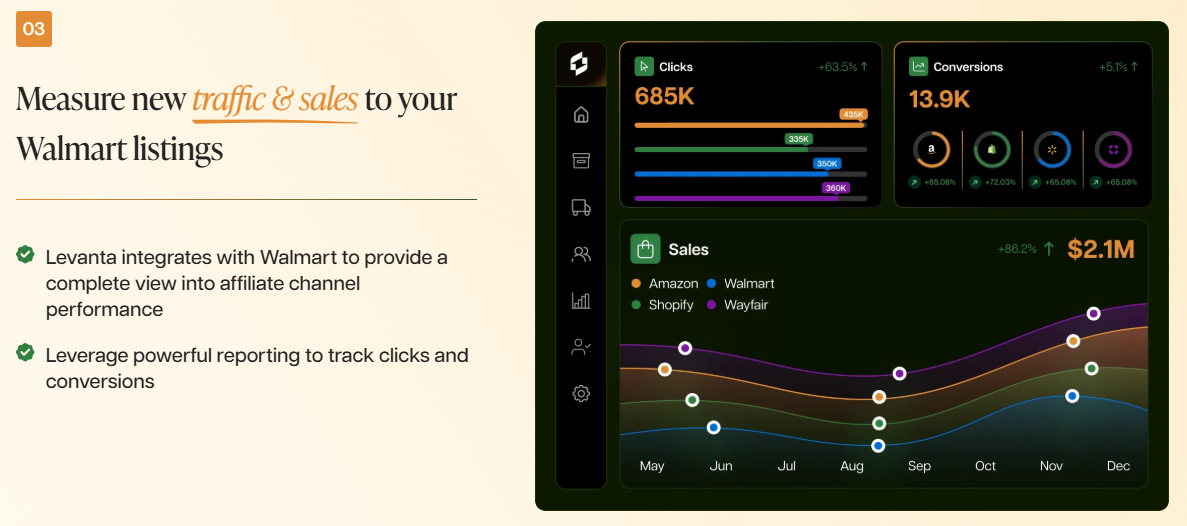
Many teams run Amazon and Shopify programs well before turning to Walmart. So once they get to Walmart it can be more about managing the program with the same tools and rules, which is where the friction begins and continues to grow.
What matters most on Walmart
- Whether Walmart runs in the same workflow as your other channels
- Visibility into off-Walmart traffic and how it converts
- Attribution windows that fairly credit your partners
- Clean reporting that lines up with Amazon and Shopify
How Levanta approaches it: Levanta supports Walmart alongside Amazon and Shopify in one platform, so you don’t need to learn a separate system when you expand. Partners, commissions, and reporting stay in the same place.
How PartnerBoost approaches it: PartnerBoost is an approved Walmart Marketplace Solution Provider, supporting more than 2,500 marketplace brands and 500,000+ SKUs across its client base. Walmart’s Sales Rewards and Attribution APIs, which PartnerBoost builds on, give sellers programmatic visibility into offsite traffic and item-level attribution. If Walmart attribution depth is a priority, that’s worth a close look.
If you want Walmart to be another channel in an existing workflow, Levanta keeps it simple. If you want to go deeper on Walmart-specific attribution tools, PartnerBoost’s integration is worth evaluating.
Running One Program Across Multiple Channels
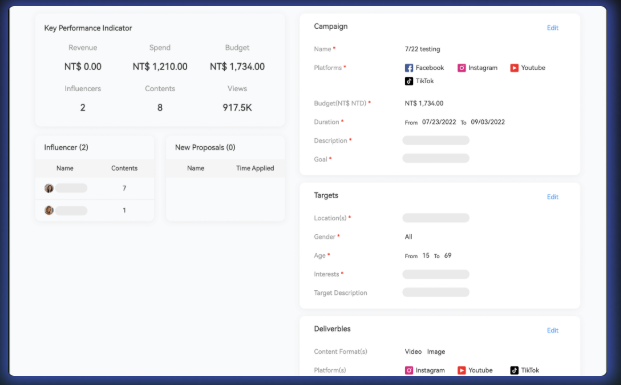
Levanta’s reporting is built around e-commerce from the start rather than adapted to it. Managers who’ve struggled to connect Amazon and Shopify data in the same view will likely appreciate the clean structure and work flows, regardless of whether you’re running one channel today and add a second and third later.
PartnerBoost fits more naturally if you already work within larger networks. Between the Tradedoubler integration and its Walmart attribution tools, it gives you strong channel-specific data, though you may be piecing more of the picture together yourself.
Partner Recruitment and Marketplace Access
Recruiting is usually the most time-consuming part of an affiliate manager’s job, so this difference matters.
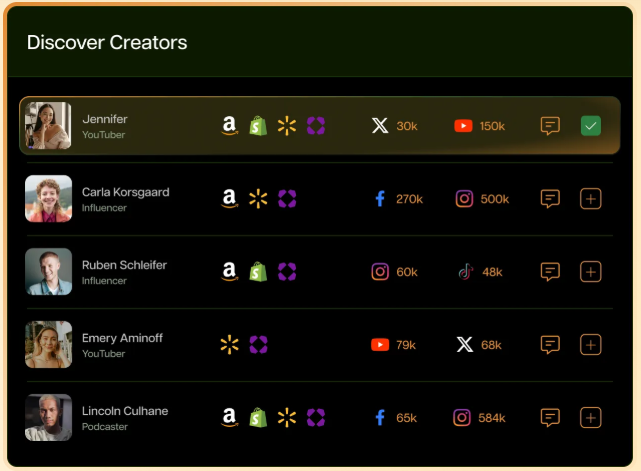
Levanta leans toward built-in recruitment. Its Creator Marketplace allows brands access to 90,000+ vetted creators, plus potentially millions more through its AI-powered Social Discovery tool, which is huge if you’re starting from scratch, operating on a lean team, or trying to grow your existing creator list. Levanta also runs a free Slack community for brand operators and affiliate practitioners to trade trials and triumphs. What’s also nice is that it’s open to anyone regardless of whether they use the platform, so you can still gain great info and connections from fellow affiliate managers.
PartnerBoost works in a more network-based way. It supports Amazon workflows, has Walmart Solution Provider status, and focuses on influencer management, product seeding, content tracking, reporting, and campaign organization. If you already recruit through affiliate networks, that’s a practical fit.
Product Seeding and Creator Workflow
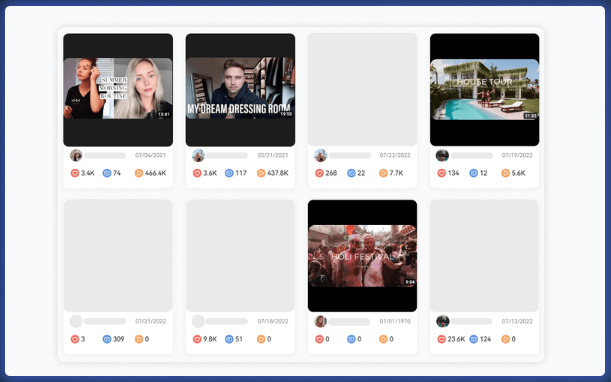
Creator programs involve far more than links. You’re sending samples, approving content, negotiating paid placements, and connecting everything back to performance.
Levanta’s creator tools include:
- Automated product sampling and seeding
- Paid placements
- Creator payments plus custom and private commissions
- Branded creator signup pages
- Tax reporting (1099 filing)
- Creator discovery, including finding creators already talking about your brand
- A Claude/ChatGPT MCP integration that lets brands ask natural-language questions about their program’s performance data, on all paid plans
PartnerBoost’s workflow tools include:
- Product seeding and sample tracking
- Payment automations
- Creator and influencer payments
- Influencer content tracking
- Campaign organization
- AI-powered content optimization for SEO
- Real-time reporting and performance management, including customizable reports
Levanta Vs. PartnerBoost: How to Know Which Is The Best Fit for your Mix
Every affiliate manager is tasked with the job to find partners, send samples, approve content, set commissions, check performance, and more. That said, even the very best platform will fall short if you don’t have the ability to manage it.
Levanta keeps things simple: One platform, one workflow, covering Amazon, Shopify, Wayfair, TikTok Shop and Walmart individually or together. That means it’s easier to set up and maintain, which is especially nice for lean teams. The tradeoff is that it’s built for a specific type of program, so if your needs grow beyond e-commerce affiliates and creators, you may eventually want something broader.
PartnerBoost can handle more, but can you and your team? Partner boost is a fit for a well-established, seasoned affiliate mix and team. You get publisher discovery, influencer discovery, campaign tracking, payment automation, and services are all in the mix. That’s valuable if you’re building out a broad national or international partnership program, but if your goal is affiliate and creator performance on Amazon, Shopify, or Walmart, it may be more than you need. More coverage and tools also mean more to configure and more internal ownership.