


- Partnerize Alternatives: 7 Platforms to Consider - November 9, 2026
- Signs You Need a New Affiliate Agency - August 26, 2026
- In-House vs Agency Affiliate Programs: How I’ve Seen Brands Choose What Actually Works - January 22, 2026
Partnerize built its reputation with large brands that run complex partnership programs. It covers partner discovery, recruitment, tracking, payments, brand safety, and fraud prevention in one platform, and it has a loyal following among enterprise retail and consumer brands.
It also has a profile that does not fit every team. Pricing is quote-based, implementation takes time, and some programs need either less than a full enterprise suite or more of one specific thing, such as a SaaS partner marketplace or a lighter tracking tool.
If you are weighing a move, or just checking that you are not paying for features you never use, this guide compares seven alternatives. Each section covers what the platform does, who it suits, and where it may fall short.
Partnerize Alternatives Quick Comparison

A note on pricing: this category changes its numbers often, and several vendors only quote on request. The figures below come from each vendor’s pricing page at the time of writing. so treat them as starting points and confirm them with each vendor.
| Platform | Best for | Pricing | Check for this |
| Impact | Large programs mixing affiliate, influencer, and B2B partners | $30/mo + 2.5% of revenue (Starter), $500/mo (Essentials), $2,500/mo (Pro), Enterprise custom | Setup and add-on fees |
| PartnerStack | B2B SaaS companies | Not listed; quoted after a demo | Narrow fit outside SaaS |
| Awin | Brands that want an established publisher network | $49/mo + 3.5% per sale (Access); from $99/mo + 2.5% (Accelerate) | Fee is a percentage of sale value |
| Everflow | Brands, agencies, and networks that want direct partner ownership and full-journey reporting | Custom quote depending on your business needs | Partner supply relies on your own recruitment |
| TUNE | Teams that want a configurable, white-label platform | $1,500/mo paid annually (Scale); Contract custom | Price point and complexity |
| Affise | Performance networks and agencies running web and mobile traffic | Starting at $499/mo with commitment, $625/mo without (Beginner) | Entry cost for smaller programs |
| Trackdesk | Small and mid-sized programs and agencies | Starting at $299/mo (Business), $499/mo (Enterprise) | Fewer enterprise-grade extras |
Why Teams Look Beyond Partnerize

Partnerize has a good reputation. Its G2 profile shows a 4.3 out of 5 rating across more than 100 reviews, and its strengths in automation, fraud prevention, and enterprise onboarding come up often. The reasons teams look elsewhere tend to fall into a few groups:
Cost and contract structure. Partnerize quotes pricing on request, and G2 users rate its perceived cost at the top of the scale. The same page reports an average implementation time of about two months. That is reasonable for a large rollout and a long wait for a team that wants to be live this quarter.
Fit. A platform built for enterprise partnership management can be more than a mid-sized program needs. Teams paying for a full suite sometimes use a fraction of it.
Specialization. A SaaS company may want a marketplace of software partners. A performance network may want mobile attribution. A retailer may want an established publisher base. None of those are Partnerize’s main focus.
Ownership. Some brands want to run partner relationships directly, under their own brand, instead of through a third-party environment.
What to Compare Before You Switch

A feature checklist rarely settles this decision, but these questions usually do:
- Total cost, not list price. Add platform fees, percentage fees on sales or commissions, setup charges, and payment processing. Two platforms with similar monthly prices can differ a lot once volume grows.
- Partner types. Affiliates, creators, referral partners, resellers, and strategic partners each need different tracking and payout logic.
- Attribution depth. Last-click reporting is easy to find. Tracking repeat purchases, multi-step journeys, and post-sale revenue is less common.
- Partner supply. Some platforms hand you access to a large pool of publishers. Others give you the infrastructure and expect you to bring partners.
- Payments and compliance. Check currencies, tax forms, payout timing, and fraud screening.
- Migration support. Ask whether you can run old and new tracking side by side during the switch.
Alternatives to Partnerize: A Deeper Look
Now that you know what to compare, here’s a closer look at each platform. For every one, we cover what it does well, what it costs, who it suits, and where it falls short. Use the “Best for” line at the top of each section to quickly spot the ones worth a demo.
1. Impact
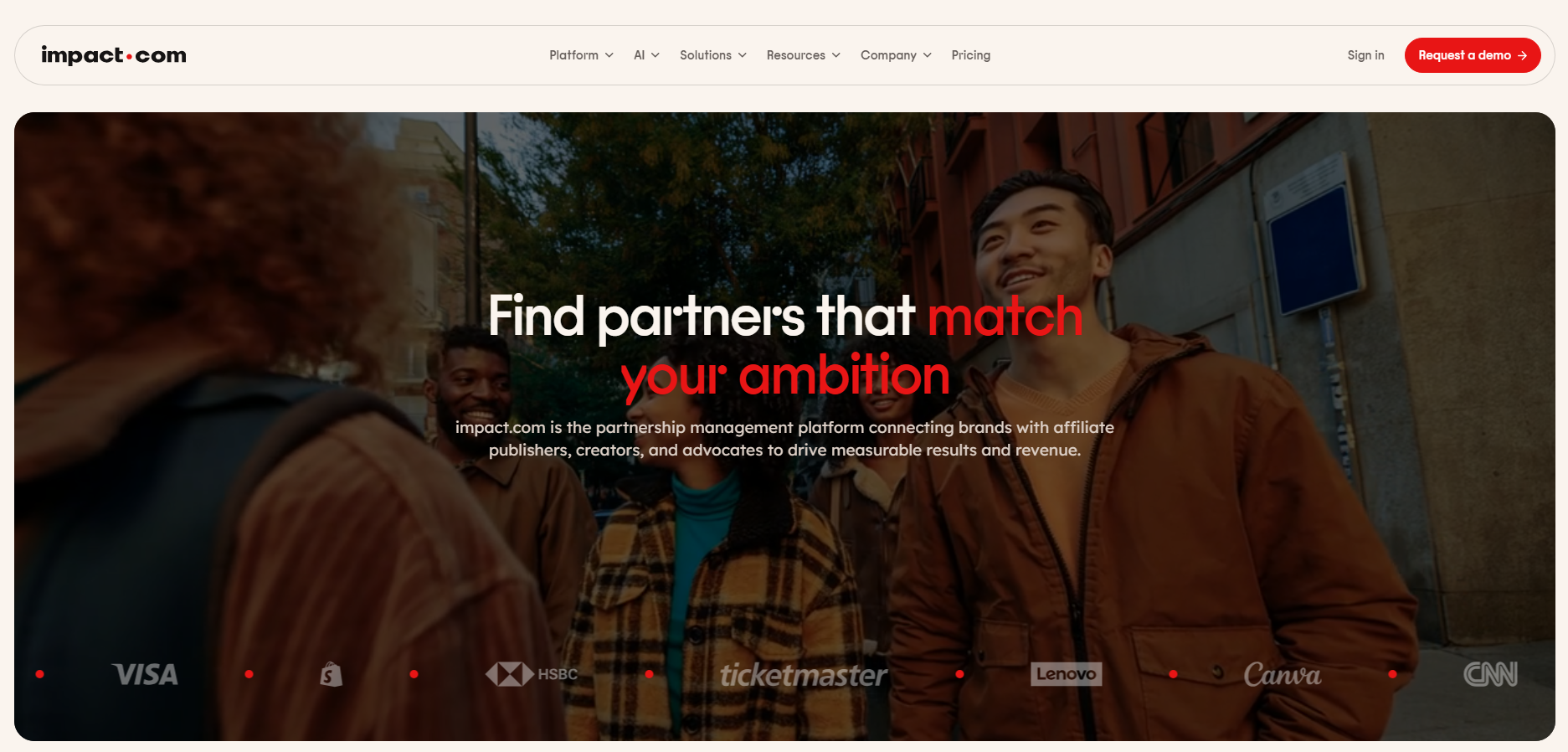
Best for: Large programs that mix affiliate, influencer, and B2B partners under one roof.
Impact is the platform most often named first in Partnerize comparisons, and G2 lists it as the top alternative. It handles discovery, contracting, tracking, and payouts for affiliates, creators, and business partners, and it offers a vetted marketplace for recruiting along with first-party, cookieless tracking. For brands running several partner types who want one contract and one dashboard, that breadth is the draw.
Pricing has more layers than a single monthly figure. Impact lists tiered plans for smaller programs (Starter at $30 per month plus 2.5% of revenue, Essentials at $500 per month, and Pro at $2,500 per month) and negotiates enterprise contracts, and its own help center explains that invoices can include subscription fees, payment-processing overages, and service fees such as setup, ad hosting, and custom reports.
Trade-offs: Reviewers on comparison sites mention that onboarding can feel heavy for teams without dedicated partnership operations staff.
2. PartnerStack
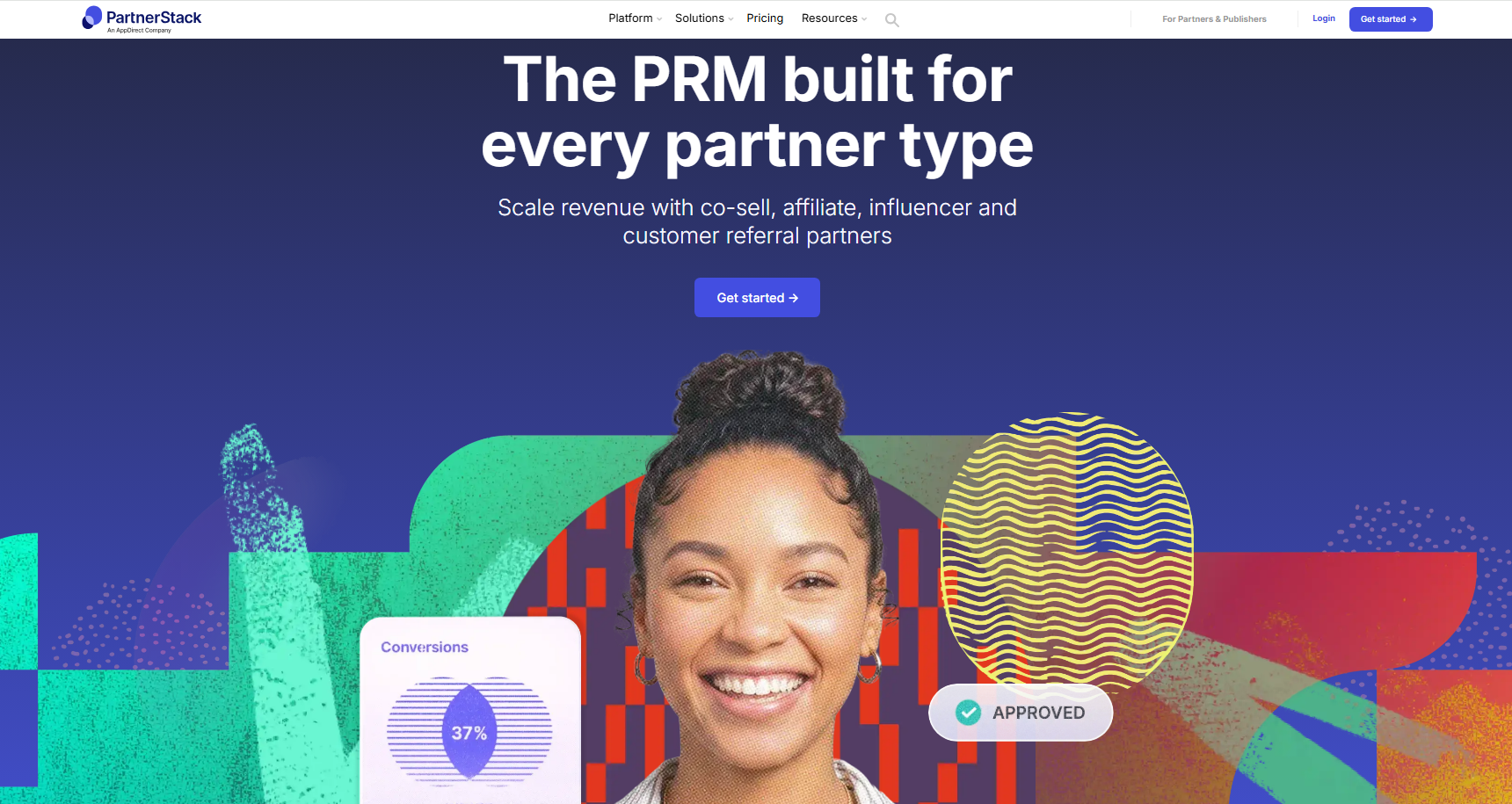
Best for: B2B SaaS companies running affiliate, referral, and reseller programs.
PartnerStack is designed around software subscriptions. It supports recurring commissions, partner onboarding, and a marketplace where SaaS partners find programs to join. Third-party sources put the marketplace at more than 100,000 partners, which helps a software brand that wants inbound recruitment from partners already familiar with the format.
The focus cuts both ways. Companies selling physical goods or running a retail-style program will find less to work with. PartnerStack also does not publish prices. Review sites report a platform fee plus a commission-based fee, with figures between 3% and 15% appearing in some guides, so costs rise as partner revenue rises. Get the structure in writing.
Trade-offs: Narrow fit outside SaaS, and variable costs that scale with partner payouts.
3. Awin
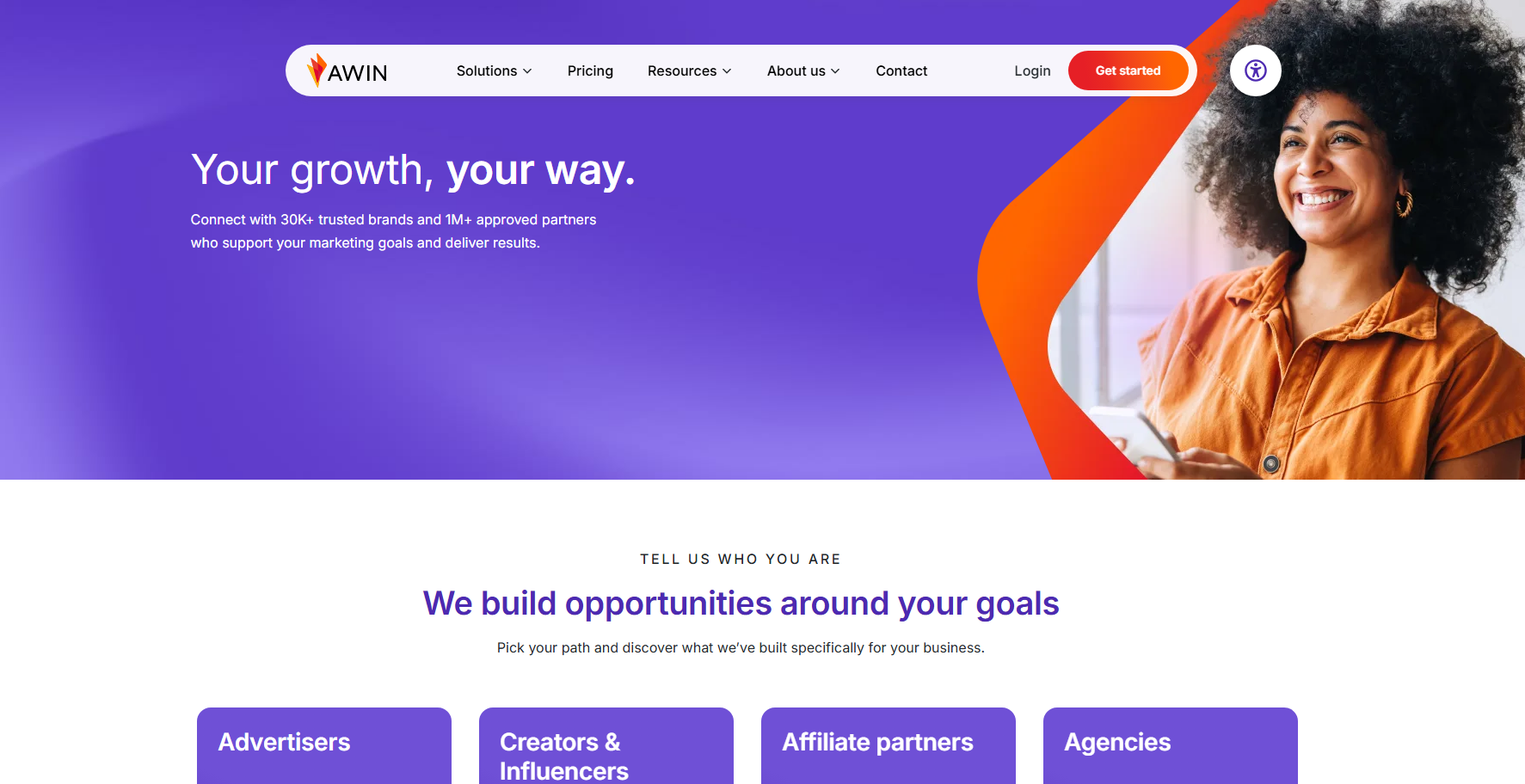
Best for: Retail and ecommerce brands that want access to an established publisher network more than a standalone tracking tool.
Awin works as a network and a platform in one. Brands get access to a large global base of content, coupon, loyalty, and creator partners, while Awin handles tracking, payments, and fraud protection. ShareASale merged fully into Awin in 2025, so former ShareASale advertisers now sit here as well.
In the US, the Access plan lists $49 per month after the first month, a $0 joining fee, and a tracking fee of 3.5% of transaction value, with a three-month minimum term. The Accelerate plan starts at $99 per month with a 2.5% tracking fee, and Advanced is custom-priced.The tracking fee applies to the sale, not to the commission, so model it against your average order value and the commission rates you plan to offer.
Trade-offs: Percentage fees grow with sales, and a network model means partners generally live inside Awin’s environment instead of your own branded portal.
4. Everflow
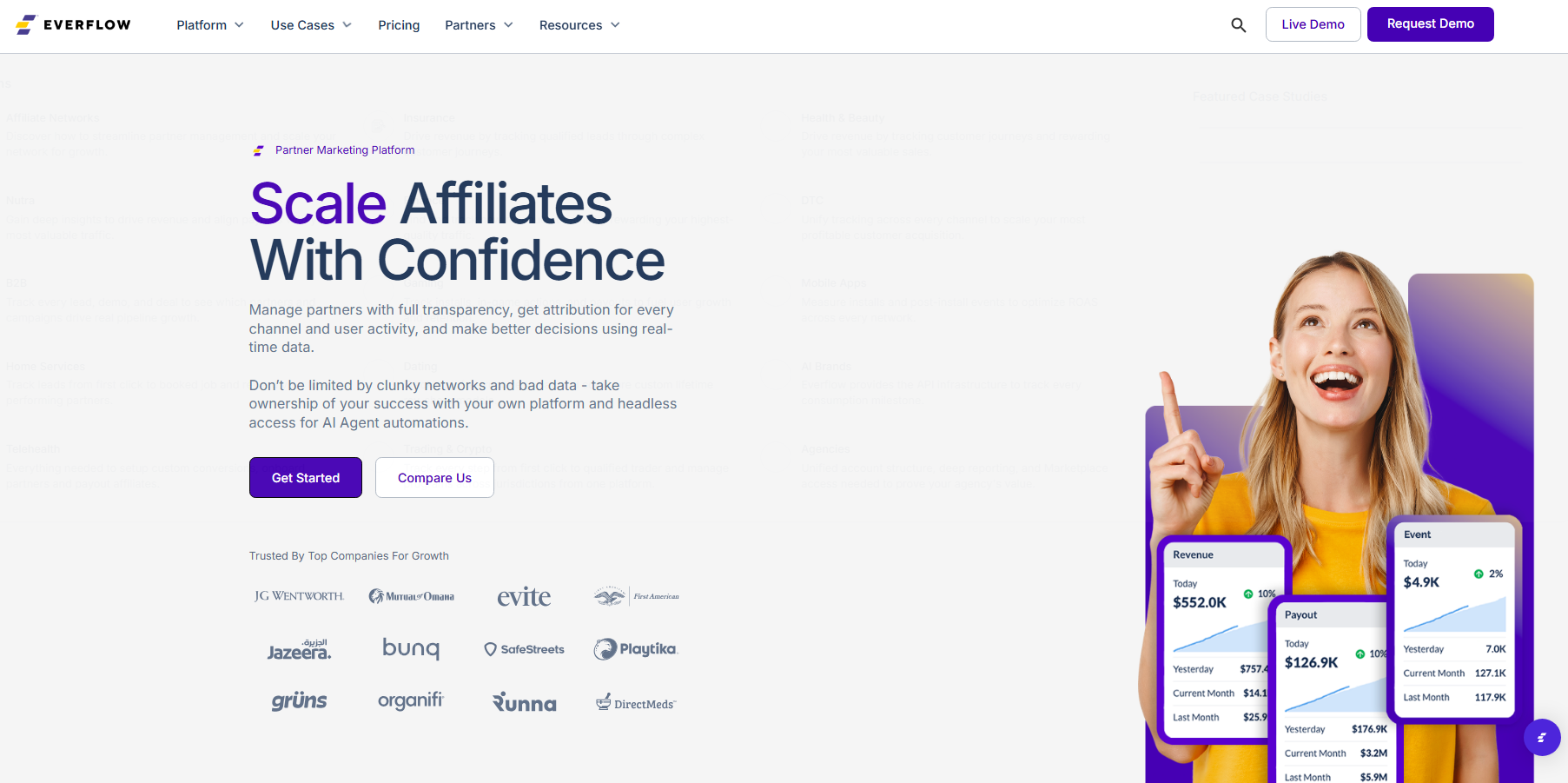
Best for: Brands, agencies, and networks that want to own their partner relationships and see revenue beyond the first click.
Everflow is a partner marketing platform covering affiliates, referrals, strategic partnerships, and ad platform integrations in a single dashboard. Its attribution goes past last click. It can track engagement events and post-purchase revenue such as repeat orders, upsells, and subscriptions, so partners can be compared on long-term value instead of first conversion.
It runs as a white-label platform, which lets a brand manage partners directly instead of through a third-party network. Everflow says this can remove typical network fees, which it estimates at around 5% of payouts.
Other features include managed partner payouts through Everflow Pay, monitoring for broken or blacklisted tracking links, and API and MCP server access so AI tools can work with tracking data. Everflow does not list prices on its site. Its pricing page asks for your monthly affiliate payouts and business type, then provides a custom quote, and plans require a six-month commitment.
Trade-offs: Discovery and recruitment lean more on your own outreach than on a built-in network. The platform has a marketplace for finding partners, but programs that depend on a large established publisher base may find more of that at Awin or Impact.
5. TUNE
Best for: Brands, agencies, and networks that want a highly configurable, branded platform.
TUNE, which grew out of HasOffers, is built around customization. It offers configurable workflows, white-label options, reporting, and API access, and it supports both direct partnerships and the TUNE Network. Reviewers point to reliable tracking and responsive support.
TUNE’s pricing page lists two advertiser plans: Scale at $1,500 per month, paid annually, and a custom Contract plan. Scale includes 2,500 conversions per month, and onboarding and partner payments are fee-based on both plans.
Trade-offs: Reviewers describe the price as steep compared with other options, and some mention platform complexity.
6. Affise
Best for: Performance marketing networks, agencies, and brands running both web and mobile traffic.
Affise started as a performance tracking platform and expanded into mobile attribution, partner discovery, and a payments product called Affise Pay. That makes it a natural fit for teams whose partners include app install traffic alongside web affiliates.
Affise lists the entry Beginner plan at $499 per month with a signed commitment, or $625 month to month. Core, Expand, and Custom plans run from $699 to $1,999 per month with a commitment, and higher tiers add capacity and modules.
Trade-offs: A G2 reviewer noted that the pricing can run high for small businesses, so smaller programs should check the entry tier against their budget.
7. Trackdesk
Best for: Small and mid-sized programs and agencies that want solid tracking and payouts without an enterprise contract.
Trackdesk is affiliate management software for affiliate, referral, and partnership programs. It covers tracking, commission management, bulk payouts, and reporting, and it carries a 4.8 rating from roughly 140 Capterra reviews.
Trackdesk lists affiliate program plans at $299 per month for Business, $499 for Enterprise, and from $1,199 for Enterprise PLUS. Separate network plans add features such as advertiser management and advertiser reporting.
Trade-offs: It is built for lean teams. Programs that rely on Partnerize for deep brand safety controls or complex enterprise integrations should test Trackdesk against those requirements before committing.
How to Choose

- If your partners are mostly SaaS affiliates and resellers, start with PartnerStack and Impact.
- If you want a ready-made publisher base for a retail program, look at Awin first.
- If you run a network or agency with web and mobile traffic, Affise and TUNE deserve a demo.
- If you want to manage partners directly with deeper attribution, Everflow and TUNE are worth comparing side by side.
- If you need good tracking at a lower cost, Trackdesk is a sensible place to begin.
Whichever shortlist you build, a few steps make the decision easier:
- Ask each vendor for an itemized quote that includes setup, percentage fees, and payment costs.
- Have each one walk through your own top five partners and show how performance would be reported.
- Confirm whether you can run old and new tracking in parallel during migration.
- Speak with a customer in a similar program size before signing.
The Bottom Line

Partnerize remains a strong option for large, complex programs, and many brands are happy with it. The alternatives above exist because programs differ. Some need a SaaS marketplace, some need a publisher network, some need mobile attribution, and some need a simpler tool at a smaller price. Start with the partner types you run and the costs you can plan for, then test two or three platforms with real data before deciding.