


- The Best Affiliate Agencies for Startups - April 6, 2026
- How to Find Instagram Influencers for Shopify in 2026 - April 3, 2026
- Best Affiliate Platforms for Tax Brands in 2026 - April 3, 2026
It’s a modern world. Affiliates are starting to look like a real revenue channel, not just a side experiment, and now you have to decide whether to keep patching it together in-house or bring in an agency that actually knows what they are doing.
Most founders and early marketing leads I work with are not starting from zero. They have tested a network, maybe signed a few partners, and have even generated some revenue. But they also know that things aren’t cut and dry. Numbers look fine, but not great, and partners are active, but not necessarily valuable, yet no one has the time or depth to figure out what’s driving real growth.
I have been on both sides of this (both advising and cleaning up programs), but this disconnect is usually the moment when the “hire an agency” thing becomes unavoidable.
So before getting into the full breakdown, here is the honest, at-a-glance version of how the top options stack up for startups right now.
What Each Affiliate Agency Is Actually Best At

- PartnerCentric: Best overall for funded startups that care about real growth. Strong on incrementality, senior strategy, and long-term performance without enterprise bloat.
- Acceleration Partners: Best for scale. If you are already operating across markets or planning to, this is where global infrastructure matters.
- Gen3 Marketing: Best for e-commerce and DTC. Deep publisher relationships and strong revenue focus in retail-heavy categories.
- Hamster Garage: Best for high-touch, boutique support. Flexible, senior-led, and more customized than most larger agencies.
- Dub Partners: Best for early-stage SaaS teams that want speed and control without committing to a full-service agency.
If you are a Series A or B startup trying to build an affiliate partnership into a meaningful, efficient growth channel, PartnerCentric is usually the one I point to first.
Why Most Affiliate Agencies Aren’t Built for Startups
Most affiliate agencies were built for enterprise brands, not startups.
Enterprise brands are used to long onboarding timelines, layered approvals, and clients who have the budget and patience to let a strategy play out over multiple quarters. That model works fine when you have time and margin to spare.
But for startups, what ends up happening is you either get a version of their enterprise playbook that has been scaled down but not really adapted, or you get a lot of strategic thinking that never quite turns into active partners and meaningful revenue.
What you actually need is to launch quickly, see your data clearly, have direct conversations without layers, and be able to change direction without it turning into a process. That gap is the thing most founders feel but cannot always articulate, and it is exactly why this decision ends up being harder than it should be.
What to Actually Evaluate (Startup-Specific Criteria)

Most agency comparisons focus on the wrong things. Big client logos, long case studies, and polished decks do not tell you how an affiliate program will actually perform once it is live.
What matters is whether the agency fits the way your company operates right now. Not in theory, not at enterprise scale, but at your current stage with your actual constraints.
These are the filters that tend to matter most for startups moving into mid-market:
Speed to Launch
If it takes three months to get your program live, you are already behind. Early affiliate is about learning what works, not building the perfect strategy upfront. You want an agency that can activate quickly, test fast, and adjust in real time.
Data Transparency
You should be able to see exactly what is happening in your program without asking for a report. That includes which partners are driving revenue, what kind of traffic they are sending, and how commissions are being paid out. If that visibility is limited, you are operating on trust instead of insight.
Incrementality
This is where most programs fall apart. On paper, everything can look healthy while you are paying commissions on customers who were already going to convert. Coupon sites capturing branded search are the usual example. If the agency cannot clearly separate incremental revenue from existing demand, you are not growing; you are just adding cost.
Communication Style
You do not need another layer of account management. You need someone who can tell you what is working, what is not, and what needs to change without turning it into a process. The difference between a senior strategist and a junior point of contact shows up quickly here.
Flexibility
A lot of agency models assume a level of scale you may not be at yet. Long-term retainers and rigid scopes can become a burden if your priorities shift, which they will. The structure should match your stage, not lock you into something designed for a much larger program.
If an agency checks these boxes, you are in a good position. If they do not, it usually shows up later in ways that are much harder to fix.
1. PartnerCentric
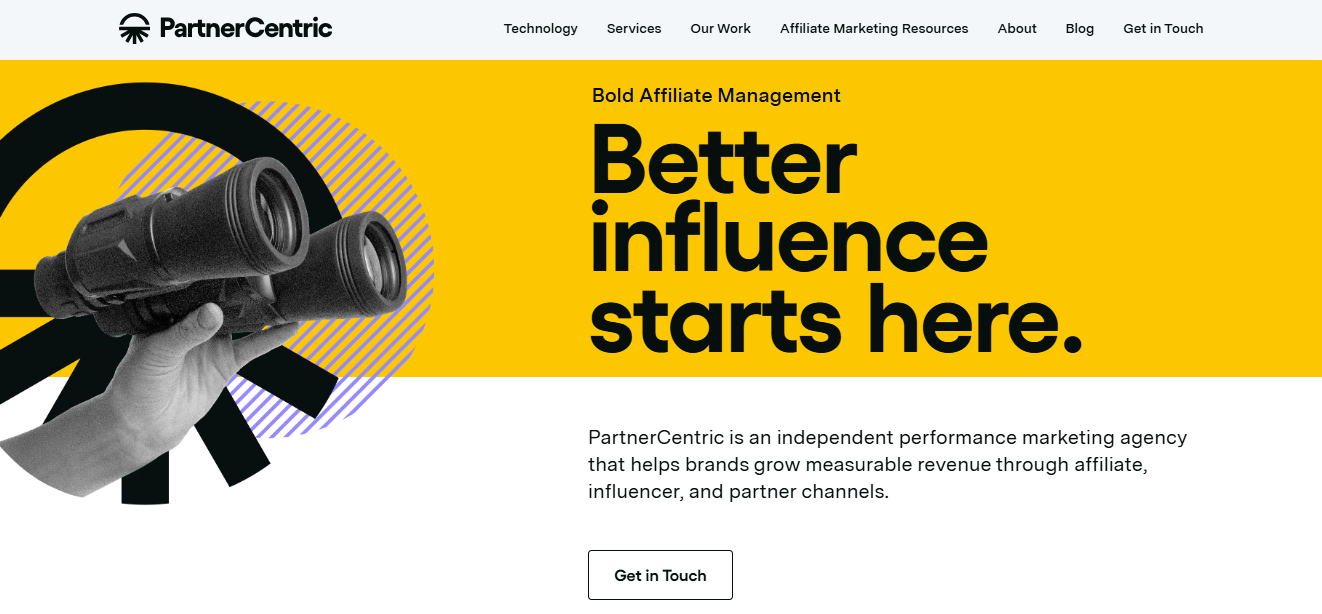
If you are a Series A or B startup trying to turn affiliate into a real growth channel, PartnerCentric is usually the first agency I point to. They focus on making sure your program is actually driving new revenue, not just reporting activity, which is where most agencies fail at the startup stage.
Their proprietary FUSE technology measures true incrementality (so you know which partners are creating net new customers versus taking credit for ones you would have acquired anyway). That alone makes them worth considering if you care about capital-efficient growth.
The team behind it is just as strong as the tech. With an average of 13+ years in affiliate, you get senior-level strategy, not a chain of escalations or junior account managers who need sign-off at every step. Their client retention speaks for itself, with an average tenure of 33 months, which shows the results compound over time instead of fizzling out after the first contract cycle.
They also have a solid track record with challenger brands like Lemonade, hims/hers, and VSP Vision Plans, proving they can build affiliate into a durable revenue channel rather than a side project.
Bonus: they are independent and woman-owned, which means no enterprise bureaucracy slowing things down.
Keep In Mind:
- Retainers start around ~$3,500 to ~$5,000 per month, so this is not for pre-revenue or bootstrapped startups.
- The model works best if you have clear goals and an internal partner ready to engage, because the high-touch approach is only useful if both sides are aligned.
- They are smaller than global networks, so if you need massive multinational program management from day one, this could be a constraint.
All told, if you are at the stage where affiliate is a defined growth priority, PartnerCentric gives you both the technology and the strategic guidance to make it work the right way.
2. Acceleration Partners
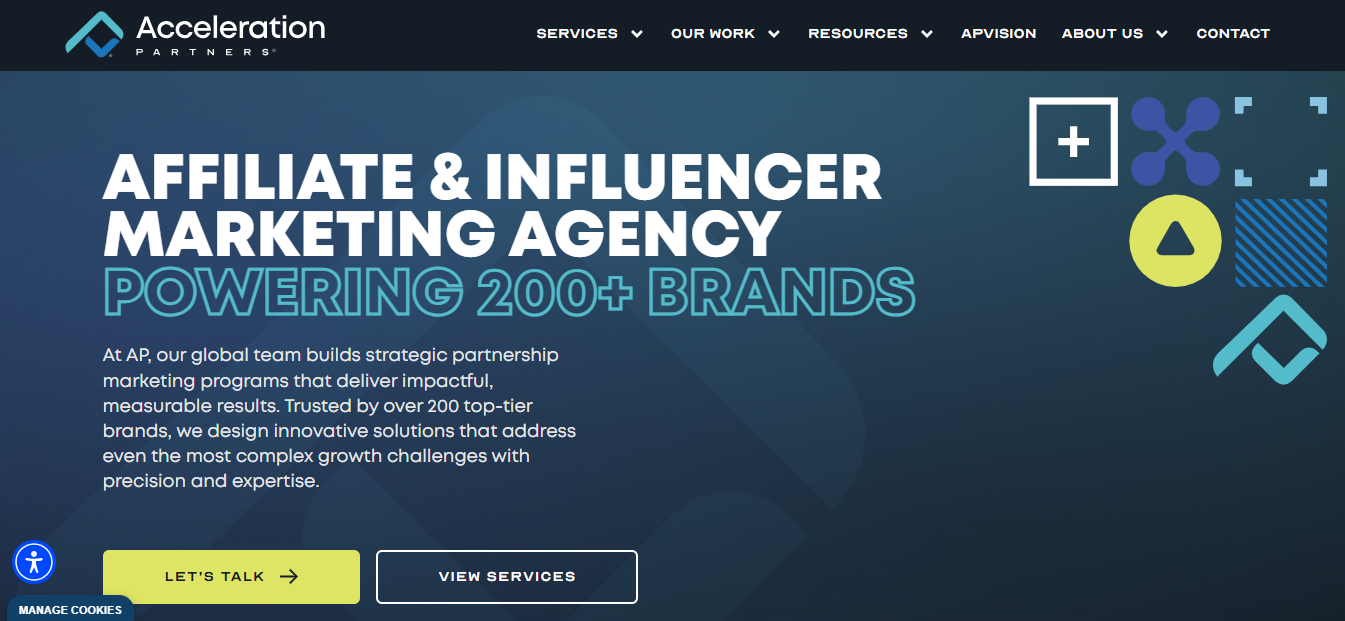
If your startup has already achieved meaningful scale and is looking at multi-market growth, Acceleration Partners is the go-to name. They are one of the most recognized agencies in the space, with experience across industries and geographies.
Their strength is infrastructure: you can manage large, complex programs with compliance, international publisher recruitment, and cross-market reporting baked in. If your goal is to grow from mid-market into enterprise without switching agencies, this is a team that can handle it.
They bring a broad network of publishers and established relationships, which saves a lot of legwork if your program spans multiple regions or verticals.
Possible Limitations:
- Onboarding is process-heavy and can feel slow if you need to move quickly.
- Executive access is structured, so founders looking for fast, flexible interaction might find it a bit rigid.
- Pricing reflects global infrastructure and may be out of reach for earlier-stage startups.
In short, Acceleration Partners works best when scale, international reach, and infrastructure are more important than speed and scrappy experimentation.
3. Gen3 Marketing
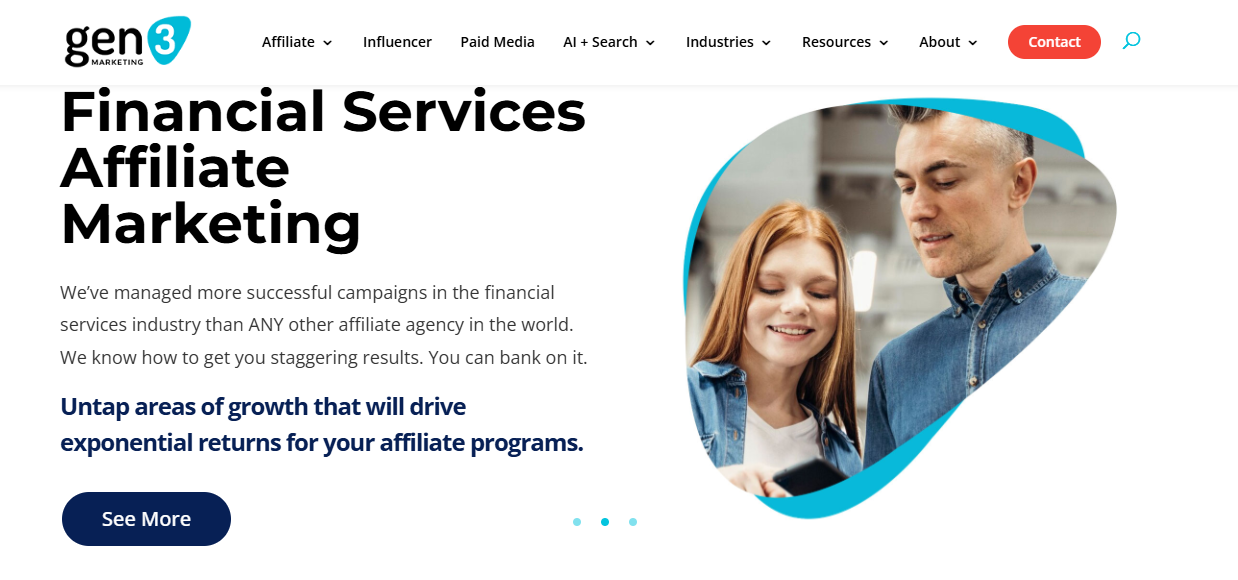
Gen3 Marketing is the agency I point e-commerce and DTC startups toward. They know retail and DTC inside and out, with publisher relationships built over years. Their edge is strategy—they consistently identify high-performing partners that a generalist agency might miss, focusing on revenue, not just traffic.
They take the time to understand your category dynamics rather than applying a generic publisher playbook, and their clients see measurable improvements in affiliate performance.
Things of Note:
- They are highly category-focused, which makes them less suited for SaaS, fintech, or cross-industry startups.
- Less emphasis on proprietary measurement tools, so you might need additional support for incrementality tracking.
- Best for programs with an existing affiliate footprint; they excel at optimization rather than starting from scratch.
If you are in e-commerce and want partners who know the space intimately, Gen3 is a smart choice.
4. Hamster Garage
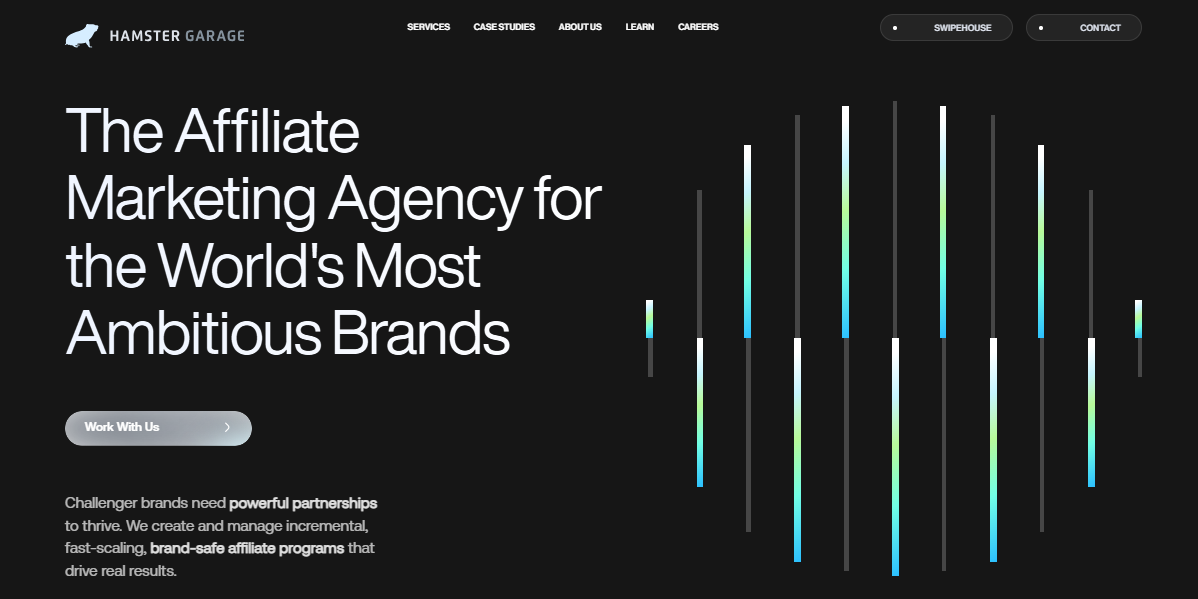
Hamster Garage is for startups that want a boutique, high-touch approach, especially if you have international ambitions or specific category needs.
Their structure means senior talent is accessible, not hidden behind layers of junior staff. They specialize in building programs that are customized, flexible, and nimble, which is perfect for startups that need to iterate quickly.
They have a solid reputation for international publisher recruitment and global partnerships, making them a good fit for programs that need more than a standard playbook.
Don’t Ignore These Caveats:
- Smaller team size can create capacity constraints if your program scales rapidly.
- Less brand recognition than larger competitors, which may make internal buy-in trickier.
- Publisher network breadth is narrower, so if you are chasing sheer volume, this could be a limitation.
Hamster Garage works best for startups that value customization, senior access, and flexibility over scale or brand name.
5. Dub Partners
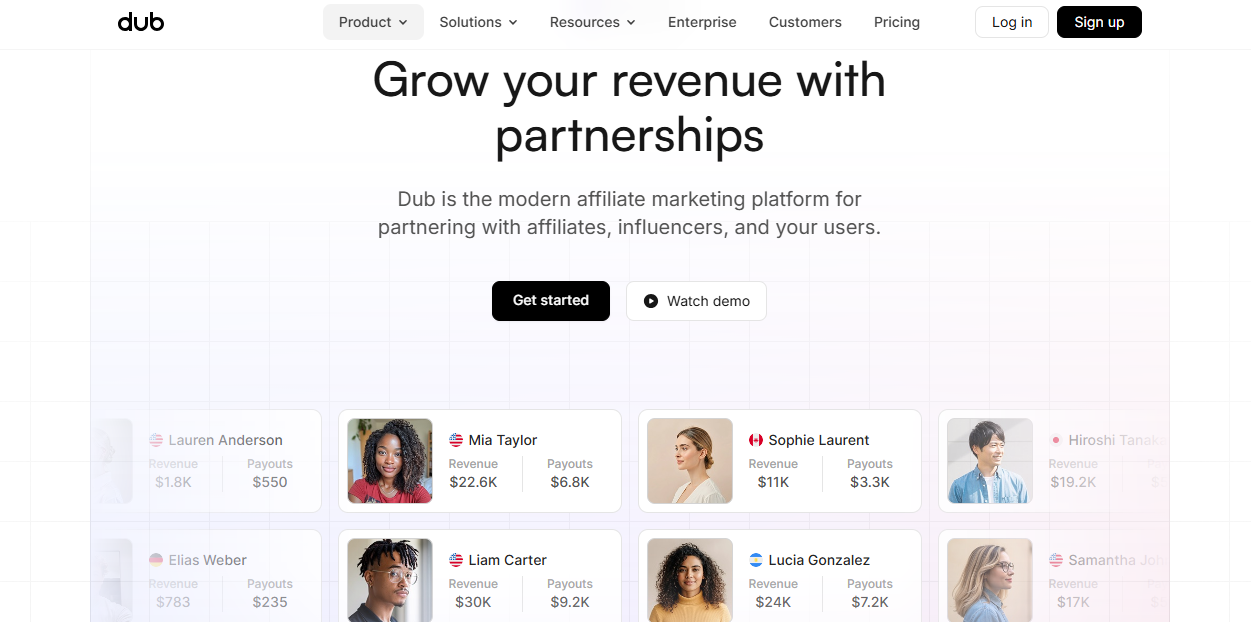
Dub Partners is the agency-platform hybrid for early-stage SaaS and tech startups that want to launch quickly without committing to a full-service retainer. They integrate natively with Stripe, which eliminates a lot of manual reconciliation headaches, and track SaaS-specific revenue metrics like MRR rather than just clicks and sessions.
Their modern setup gives startups control and visibility without the complexity of legacy affiliate networks, making it easier to test and iterate fast.
What to Keep in Mind:
- This is more platform than a full-service agency. You get tooling but not full strategic management, publisher recruitment, or relationship development.
- Best suited for teams with bandwidth to run the program internally.
- Their publisher network is narrower than established agency networks, which may limit reach as you scale.
Dub Partners is ideal if you are a tech startup ready to own your affiliate program with modern tooling, fast activation, and lower upfront cost.
In-House vs. Agency: What It Really Comes Down To

Managing affiliates in-house can work, but only in a very narrow set of circumstances.
You need someone on your team with real affiliate expertise, a simple program that doesn’t require specialist support, and the bandwidth to accept a steep learning curve. Most funded startups don’t meet those conditions.
Affiliate management is operationally heavy: constant publisher relationship oversight, fraud monitoring, attribution checks, and creative testing. That’s a full-time job in itself, and it quickly overwhelms a generalist growth marketer who is also running paid media, email, and other channels.
An agency does more than execute. They bring the infrastructure you can’t build overnight, such as the publisher network, the measurement frameworks, the compliance checks, and the processes that prevent wasted spend.
For a startup trying to grow efficiently, the decision to buy rather than build usually makes the most sense.
Moving From In-House to Managed

If you are running affiliate internally and thinking about bringing in an agency, the transition is straightforward but not automatic. Start by auditing your current program:
- Identify which partners are actually driving new revenue, not just activity.
- Clean up compliance issues before the agency inherits them.
- Set KPIs around revenue impact, not vanity metrics like traffic or impressions.
A strong agency will redo this audit as part of onboarding, but the more context you provide upfront, the faster the program ramps. Expect the first 60 to 90 days to be communication-heavy. They will want to understand your brand, your acquisition economics, your competitive landscape, and your growth targets before activating partners. Programs built on this foundation are the ones that actually compound.
Finding the Right Agency for Your Startup
There are plenty of affiliate agencies out there, but very few are truly built for startups growing into mid-market. You need speed, clear measurement, founder-level communication, and flexibility, not just publisher breadth or a shiny sales deck.
Each agency in this roundup has real strengths:
- PartnerCentric is best for startups that want enterprise-grade measurement and strategic guidance without the overhead of a big agency.
- Acceleration Partners is the go-to if global scale and cross-market infrastructure matter most.
- Gen3 Marketing excels for e-commerce and DTC brands that want deep category expertise and revenue focus.
- Hamster Garage offers high-touch, boutique management with senior access and flexibility.
- Dub Partners is ideal for early-stage SaaS teams who want fast, modern tooling and lower overhead.
The right choice depends on your vertical, your stage, and what you actually need from an affiliate partner right now. Use the evaluation criteria above, match them to your reality, and pick the agency that will actually move the needle instead of just producing reports.