


- Best Affiliate Platforms for Amazon Brands (2025 Guide) - December 11, 2025
I’ve worked with enough Amazon brands to know traffic has never been the problem. You can get eyeballs from TikTok, YouTube, review blogs, deal hunters, or three random creators who unbox your product for fun. The real mess starts after the sale:
- Attribution
- Unclear payouts
- “Amazon-ready” affiliate tools that can’t be more broken
And that’s why choosing an affiliate platform feels like surgery some days. Half of them are built for generic content creators, and the other chunk caters to coupon sites that kill your margin but rarely have buying intent.
So I put this guide together to make life easier for you and for every Amazon seller who’s had enough. These are the platforms that work well with Amazon’s ecosystem, help you scale intentionally, and don’t bury you in work you never signed up for.
1. Levanta: Best for Creator Attribution on Amazon
Nine out of ten Amazon brands I’ve worked with have had this issue at least once: creators send traffic, orders roll in, and somewhere between those two points, the trail disappears. You know someone helped you make the sale, but you don’t know who. Levanta is the tool that finally lets you follow that thread back to where it started.
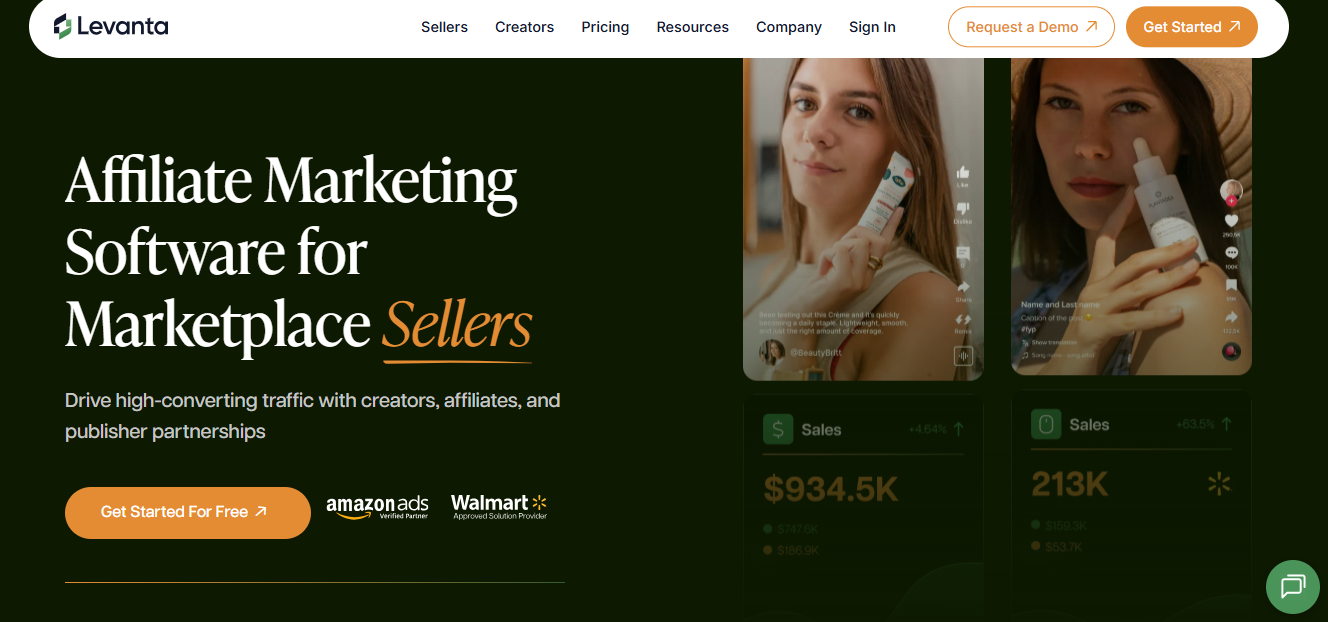
Levanta gives you proper metrics you can act on. And I don’t mean impressions or “estimated influence.” I mean, actual sales tied to the creator who caused them. That alone makes every decision like negotiating payouts, choosing who to keep, and planning next month’s budget a whole lot easier.
New brands sometimes spend weeks testing creators who look great on social media but never sell anything. With Levanta, you can see that sooner and save yourself a painful amount of money and time. Once you see the results a few times, you start thinking differently: “Who actually sells for us?” instead of “Who posts the prettiest UGC?”
Its job is simple: show you who drives revenue on Amazon, and it does that job better than anything else I’ve tried.
But building genuine relationships with creators is perhaps one of the biggest advantages of using Levanta, and its built-in messaging makes that process simple. Every conversation is organized in one place, which makes it easier to follow up consistently and nurture long-term trust. This kind of communication lets you build real relationships with your affiliates and creators so you can collaborate effectively, personalize support based on their needs (and yours!), and strengthen partnerships that drive and sustain growth.
Check out the Consumer Insights Report from Levanta
Pros
• Proper view of sales and revenue data from Amazon
• 50,000 vetted creators to connect with
• Helps brands stop wasting spend on creators who don’t sell
• Works well with Brand Referral Bonus
• Great for proving ROI to finance or leadership
Cons
• Not useful if you don’t work with creators yet
• It’s not a marketplace for finding new creators
Who it’s for: Amazon brands using influencers, UGC, or affiliates who want reliable proof of who drives sales.
Key takeaway: Levanta is an essential tool for any Amazon brand that provides the visibility that Amazon itself cannot. You see who sells, and who just posts.
2. Amazon Associates: Best Default Option
If you want the fastest way to get your Amazon products in front of partners, the answer is still Amazon Associates. It’s Amazon, and it’s everywhere!
Most bloggers, review sites, and small creators already have an Associates account. They already know how to get links and how payments work. For me, that’s a huge plus because it alleviates me from a ton of mundane work. After all, I don’t need to teach them a system they already use every day.
Pros
- Super easy for creators to start promoting you
- People already trust Amazon’s tracking and payouts
- Your products slide naturally into list posts, review roundups, and “best X for Y” articles
Cons
- Commissions in many categories are pretty low, so top affiliates won’t always prioritize you.
- You also don’t control who talks about your brand or what they say.
- You can’t coach partners or build good long-term relationships.
- You’re one more item in a massive catalog, not the star of the show.
Who it’s for: Brands that want lots of mentions on big sites and long-tail blogs without building a custom program yet. If you just want your product to be easy to link to anywhere on Amazon, Associates can be the right call.
Key takeaway: Don’t confuse this with a full affiliate strategy. Amazon Associates is your basic setup that makes “Available on Amazon” turn into a clickable link almost everywhere online.
3. Impact: Best for Enterprise Partnerships
Impact is the platform I turn to when “affiliate” work stops being casual and turns into negotiations with people who bring lawyers to onboarding calls. Big publishers, price-comparison giants, influencers with managers, the whole nine yards of corporate affiliate marketing. These companies expect clear rules, precise data, and contracts that spell out who gets paid for what.
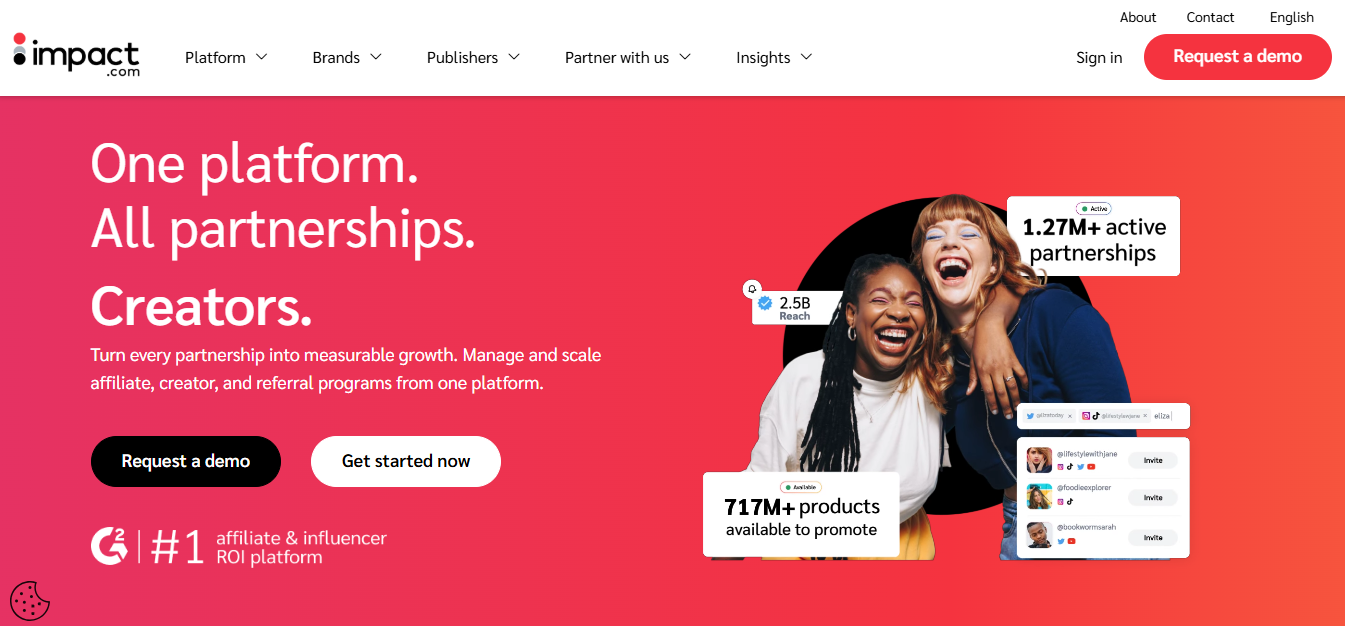
Impact fits that world because it tracks every step a partner takes with a shopper: the first click, the article they read, the paid placement they saw, the code they used at checkout. When it’s time to negotiate payouts, having details like that saves you from guessing (or paying for work a partner didn’t actually do).
Impact works best when your setup gets a bit too complicated. Maybe you sell on Amazon, run a DTC site, and also have an app or email funnel. Most tools get confused when you mix channels like that. Impact shows you everything in one dashboard instead of ten that don’t make sense
Pros
• Detailed tracking on every meaningful channel
• Great attribution system for complex customer journeys
• Easy to use interface
Cons
• Too heavy for small brands or Amazon-only sellers
• Needs a dedicated owner. This isn’t “set it and forget it” software
Who it’s for: Brands big enough to have serious partners who treat affiliate marketing like a revenue channel instead of a side income.
Key takeaway: Impact handles the messy, multi-channel setups most other platforms can’t handle. If you work with big publishers, you probably won’t accept anything less.
4. CJ Affiliate: Best for Big Review Sites
I’ve used CJ with a bunch of Amazon brands, mostly when they wanted big publishers but didn’t want the stress of a huge “enterprise” platform. CJ is kind of in the middle: big enough to have an impact, simple enough that you don’t need a full-time manager to run it.
Most of the classic high-intent sites are here. The “best X for Y” lists, the long reviews, the comparison blogs, all the places people land right before they buy something on Amazon. If a shopper is researching your product category, there’s a good chance at least one of the sites they read is on CJ.
The UI won’t impress anyone, but it works. I can approve partners fast, check their sites, and see basic performance without jumping through hoops. I’ve dropped brands into CJ with no affiliate experience at all, and they picked it up quickly, which is rare in this space.
Of course, it’s a big network, so quality varies. Some partners are great; others are useless. You still have to check their content and see if they actually rank for anything. If you’ve done even a bit of affiliate vetting before, none of this will surprise you.
Pros
• Lots of great review and comparison sites
• Easy to use, not overloaded with features
• Reliable tracking
Cons
• Mixed quality (you must vet partners carefully)
• Not built specifically for Amazon brands
Who it’s for: Anyone who wants solid review-site coverage without dealing with enterprise-level platforms.
Key takeaway: CJ gives you reach without making your affiliate program complicated, and sometimes that’s all you need.
5. Awin: Best for International Reach
If you sell on multiple Amazon marketplaces, you’ve probably seen your affiliate setup behave like everything is still U.S.-only. That “tiny” mistake costs you clicks and money, and you might not even know it. Awin is one of the networks that works well across countries and puts this issue at the center.
Awin has affiliates in Europe, the UK, North America, and beyond: comparison sites in Germany, coupon partners in Spain, niche blogs in the Nordics, influencers who only talk to French buyers. For multi-country Amazon brands, that’s far more valuable than one giant US creator with no audience anywhere else.
Awin also takes compliance seriously. Approval rules and contracts keep you away from some of the sketchier tactics that can put your Amazon account at risk. Tracking is good, even with all the different regions and currencies, which makes it much easier to report performance without building ten separate data sources.
Pros
- Global coverage, especially good in Europe
- Good compliance tools to avoid risky partners
- Reliable tracking in pretty much all markets
Cons
- Not as “Amazon-first” as Associates
- Takes more setup work if you’re selling only on one marketplace
Who it’s for: Brands selling in multiple Amazon regions that want one system instead of dealing with country-by-country setups.
Key takeaway: Awin is how you stop thinking “US + rest of world” and start running affiliates like your buyers live in different countries.
What Platform Should You Pick?
Different brands, different minds… sort of. Some Amazon brands are fine with any blog, any creator, any niche that will talk about them. Others are done with “vibes-based” reporting and want data they can trust without straining their eyes.
So before you pick a platform, think through what you’re trying to achieve. Do you need more reach? Do you need precision? Or do you need a setup that can handle dozens of partners without catching fire?
If you’re after stronger relationship-building features and more accountability, Levanta is a great place to start. It gives you a proper view of sales and traffic data from Amazon, which will save you so much time and effort in the long run.
That said, both Impact and CJ are strong contenders when your priorities lean more toward scale and traditional affiliate reach with deep integrations and sophisticated workflows.
The best affiliate platform gives you a system you can scale with and something you can rely on when Amazon gets chaotic, which is most days.